Selected work Personal project, creator and sole engineer
RadarFish
A fishing-forecast app I designed, built and shipped by myself.
- downloads
- 16,000+
- active users in Spain
- 10,000+
- star average across 400+ reviews
- 4.9
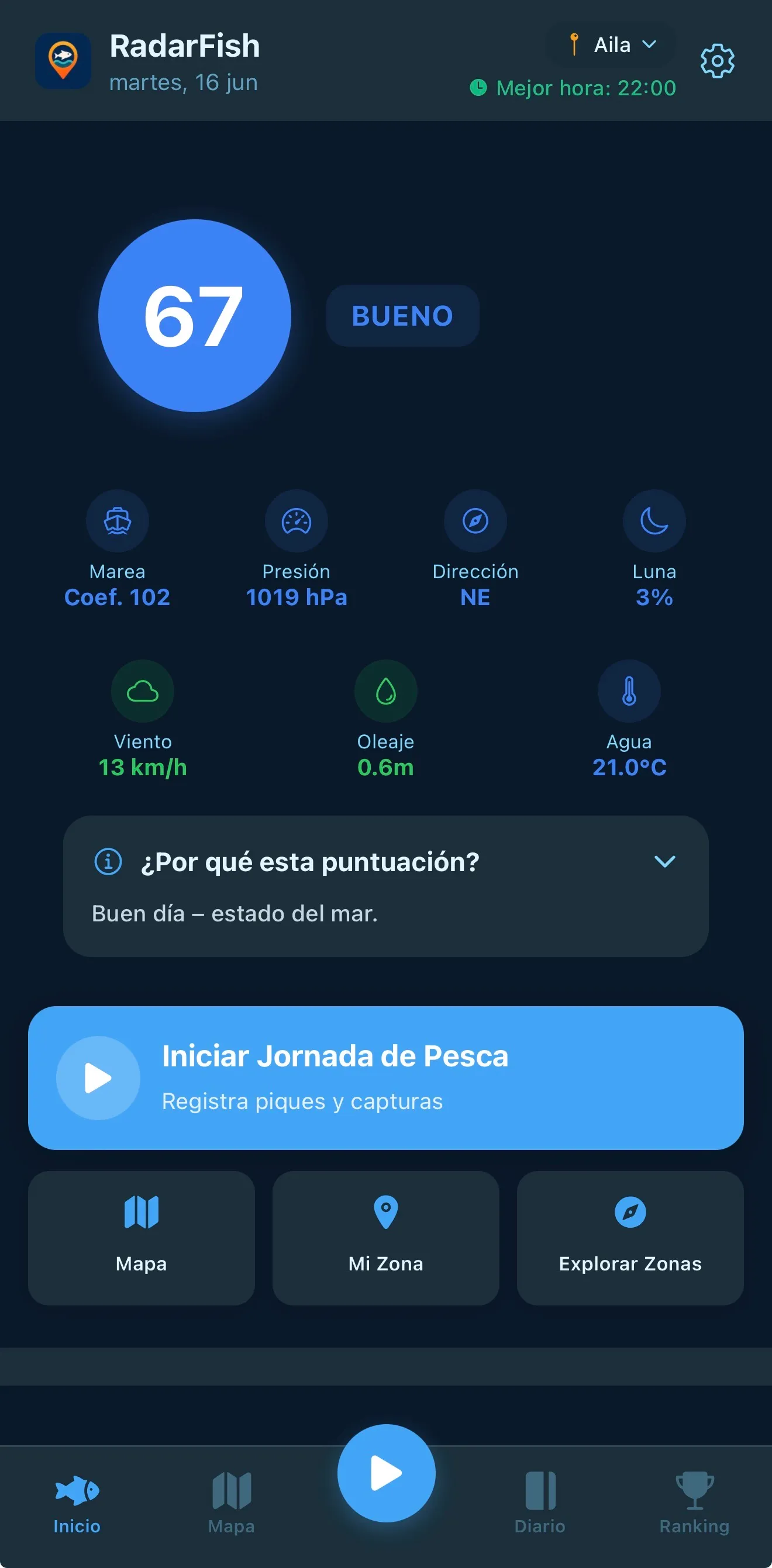
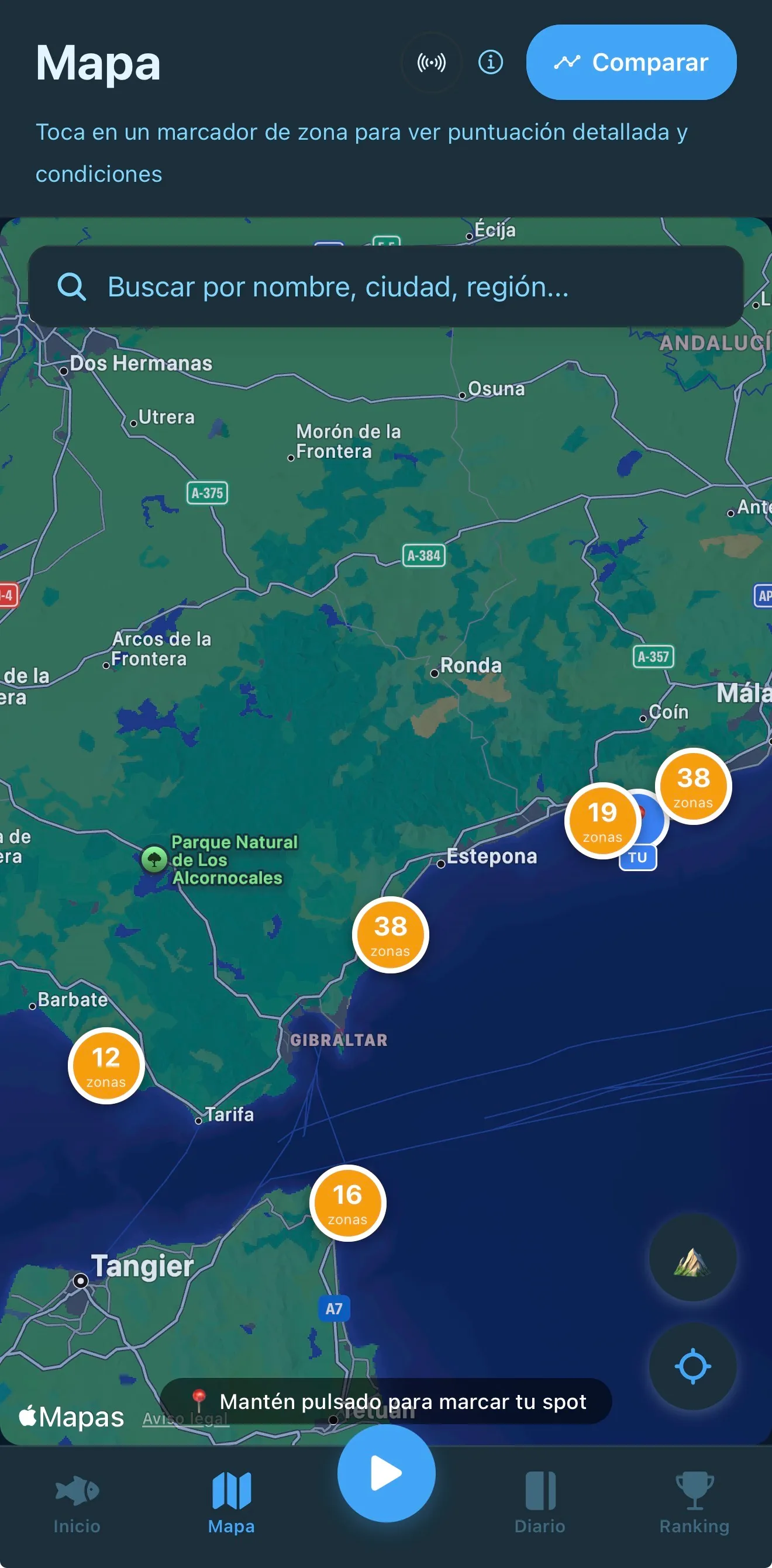
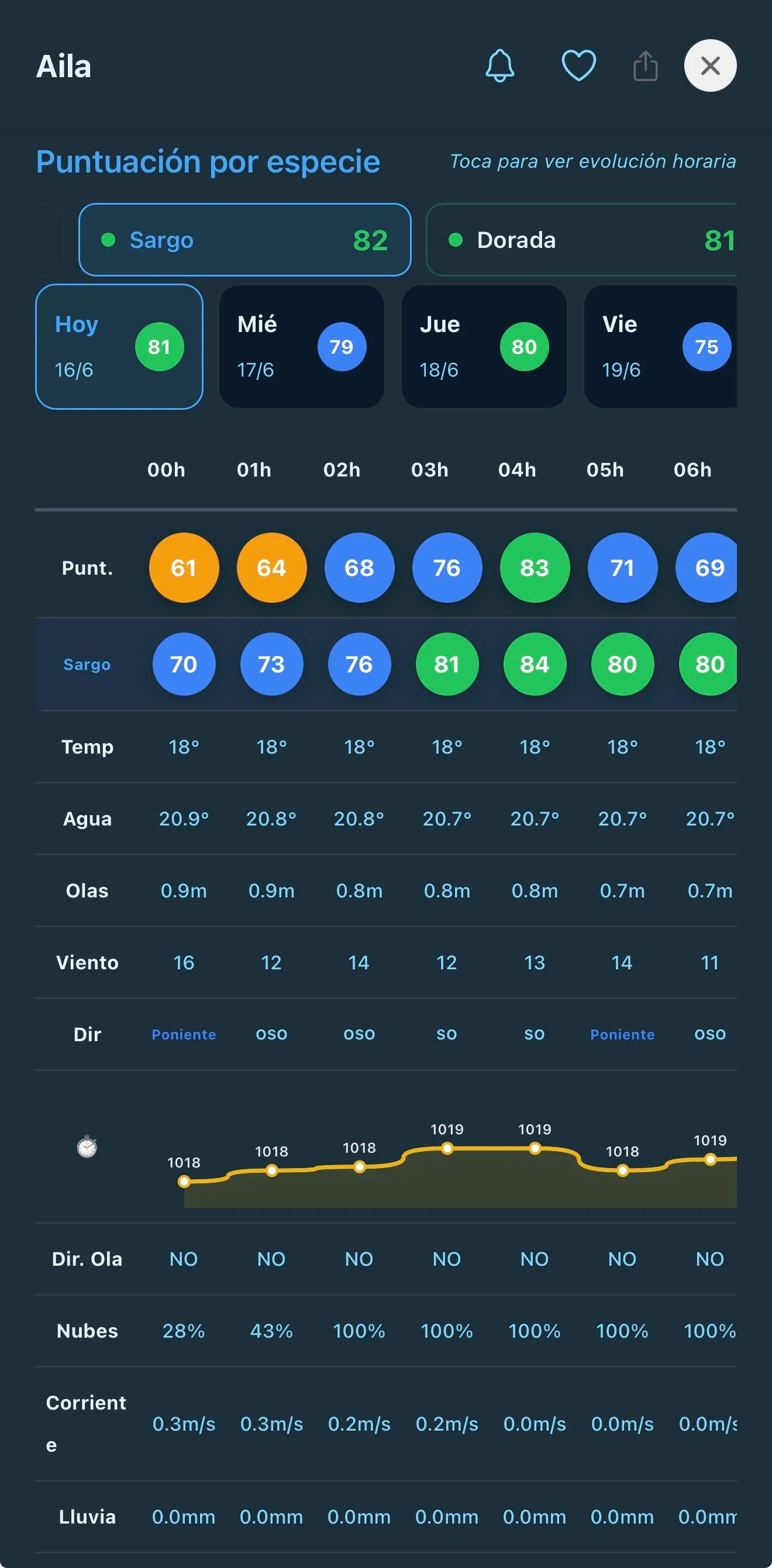
The problem
Fishing conditions depend on a pile of variables that don’t live in one place: tides, swell, wind, barometric pressure, moon phase, time of day. Most weather apps show the raw numbers and leave the interpretation to the angler. RadarFish turns those variables into a single, per-zone, per-hour score people can actually act on.
What was mine
I designed the product, the scoring model, the data pipeline and both client apps, then built and shipped all of it alone. No designer, no backend engineer, nobody else reviewing the architecture.
Architecture
- Client
- React Native app built with Expo (SDK 54, Expo Router), shipped to both stores through EAS Build. State is handled with Zustand and TanStack Query. The interface is localised in Spanish and English.
- Backend
- Node.js / Express service on top of PostgreSQL, running the scoring engine that combines marine, weather, tide and solunar data into a per-zone, per-hour score. Deployed on Railway.
- Distribution
- Freemium, monetised through Apple and Google Play in-app billing. I handle versioning, store submission and staged rollouts myself on both platforms.
- Beyond the app
- There’s also a companion marketing site (Next.js, ES/EN) and an early B2B API that exposes the same scoring data to outside consumers. Both share the same backend instead of running their own copy of it.
Decisions I’d defend
- Kept the scoring model server-side and versioned independently from the client, so calibration changes ship without an app store release.
- Chose Expo over a bare React Native setup to keep a one-person team shipping to two stores without maintaining native build pipelines by hand.
- Kept the marketing site as its own deployable, separate from the app backend. A landing-page change can’t break the scoring API.